WASHINGTON- The US Air Force (USAF) restores the B-2 Spirit of Georgia to service on November 6, 2025, for $23.7 million, which lasts just under 4 years.
The bomber crashed on September 14, 2021, at Whiteman Air Force Base (SZL) when the left main landing gear collapsed, damaging stealth structures.
This repair brings the B-2 fleet back to 19 airworthy aircraft from the original 20 built. Two prior B-2s suffered total losses in accidents too severe for economical repair, making each airframe essential for readiness.
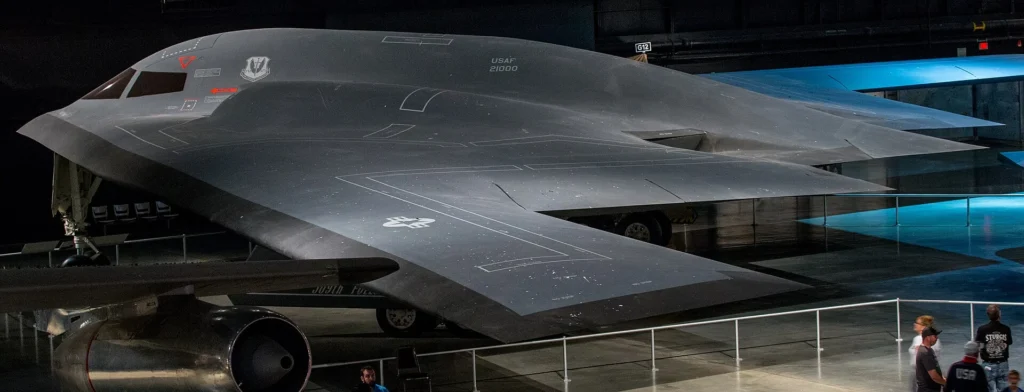
US Air Force Restores B-2 Spirit
The Spirit of Georgia runs off the runway at Whiteman Air Force Base (SZL) on September 14, 2021.
A critical mechanical lock fails, causing the left main gear to collapse. The left wing scrapes runway and grass, tearing low-observable coatings and composite skins.
Recovery crews use inflatable airbags to lift the aircraft and lock the gear. Teams tow it to a hangar for evaluation.
Col. Jason Shirley, senior materiel leader at the Air Force Life Cycle Management Center’s B-2 System Program Office, states the immediate response by the 509th Maintenance and B-2 engineering team proves critical. Damage centers on the left main landing gear bay and lower wing area.
The incident grounds the entire B-2 fleet for 18 months. Service officials initially consider the bomber a potential write-off.
A similar 2022 crash of the Spirit of Hawaii at Whiteman AFB (SZL) destroyed the wing with fire, rendering it unrepairable.
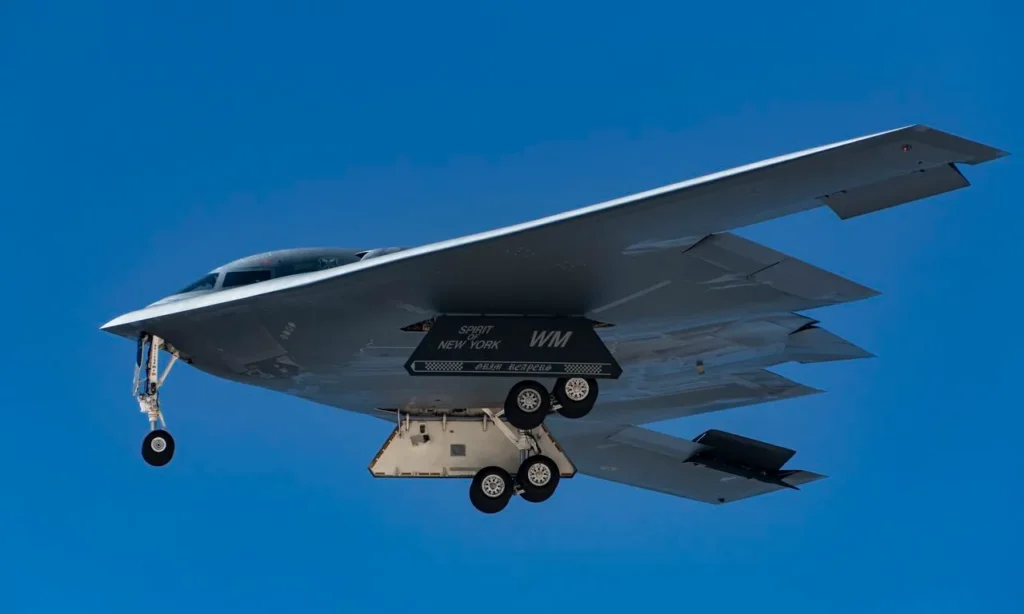
Structural Assessment and Ferry to Palmdale
Laser dimensional inspections confirm that flight control attachment fittings and landing gear bay fittings stay within tolerances.
Engineers conduct structural load analysis on primary components. Non-destructive testing on outboard wing spars reveals no internal damage.
One year after the crash, crews apply speed tape and omit low-observable treatments for temporary airworthiness.
The Spirit of Georgia ferries to Northrop Grumman’s Plant 42 (PMD) in Palmdale, California, arriving September 22, 2022.
These fixes save the government an estimated $52 million and cut nine months from the schedule.
At Plant 42 (PMD), the bomber enters Programmed Depot Maintenance with crash-specific repairs.
The Air Force Life Cycle Management Center leads the effort in four phases. Phase 1 designs repairs, and orders long-lead materials. Phase 2 builds test panels to validate concepts.
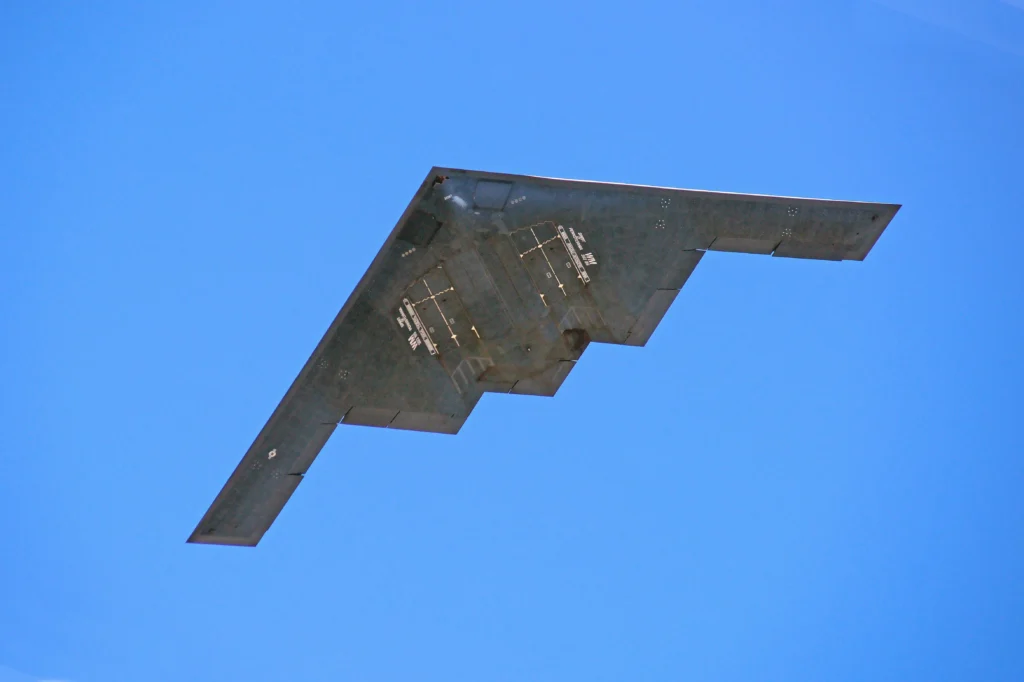
Advanced Composite Repairs
Phase 3 executes structural fixes. Engineers use an 8×4 foot composite skin section from Test Article 0998 as a donor part, reducing cost and time versus new fabrication.
Teams replace the left wingtip, outboard wing major mate skin panel, and left main landing gear door hinges. They repair composite skin disbonds and rig the gear door.
The repair restores lower wing skin functionality to carry wing loads, airstream, and internal fuel tank pressures.
Phase 4 develops airworthiness tests to certify repairs and return the aircraft to specifications. Repairs complete on May 12, 2025.
Structure engineer Matt Powers addresses curing challenges in enclosed spaces. Heat applies to damaged areas immediately adjacent to critical joints that must not overheat.
The team uses custom heating equipment, thermal surveys, insulation, and cooling air to control the final cure.
Hard knocks on composite fuel tanks risk contamination. Technicians return bonding surfaces to near lab-grade cleanliness before applying repair plies.
The $23.7 million repair costs far less than prior incidents. A 2010 Guam B-2 crash repair totaled $105 million.
An accident report values a 2008 total-loss B-2 at $1.4 billion. According to Air & Space Magazine, the Spirit of Georgia restoration sets a benchmark for economical recovery.
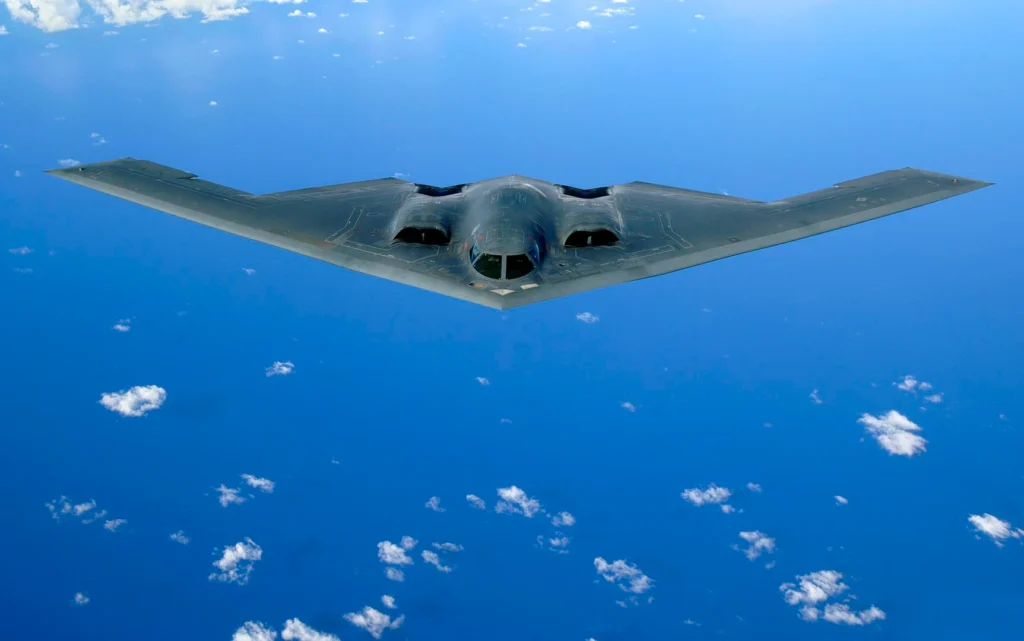
Future Sustainment
The project is the first to test a new composite resin from another platform on the B-2. This out-of-autoclave material proves reliable for large repairs, saving months and lowering rework risk. Materials and processes leverage other Northrop Grumman programs, likely the B-21 Raider.
Engineers apply scarf repair techniques that taper patches to match shifting composite grain directions.
This method avoids protruding scabs that could fail under flight loads or compromise stealth.
The Air Force states these advances improve future fleet sustainment, enabling faster repairs, reduced downtime, and extended lifespan.
Cindy Connor, deputy branch chief for the B-2 office’s Air Vehicle and Systems Management Branch, credits Air Force Global Strike Command.
The command provides critical response, concurrence on temporary repairs, and approval of an unfunded request for in-depth scarf repairs during depot maintenance.
Stay tuned with us. Further, follow us on social media for the latest updates.
Join us on Telegram Group for the Latest Aviation Updates. Subsequently, follow us on Google News