SINGAPORE- The world’s longest non-stop flight routes have expanded significantly over the past 25 years, with the average distance of the top 10 longest sectors rising 14.5% since 2000.
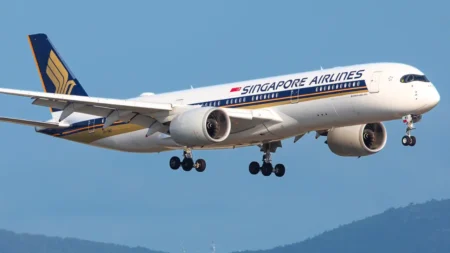
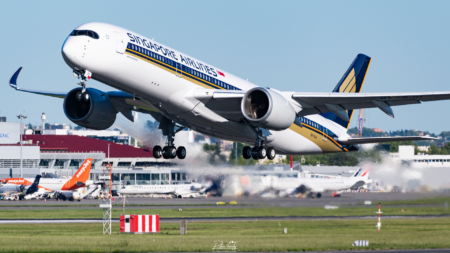
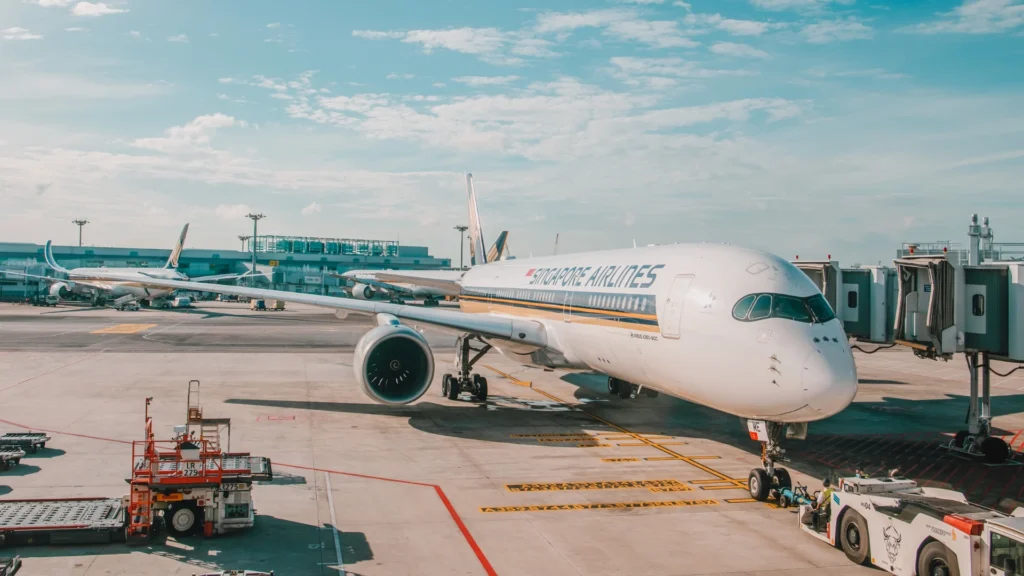
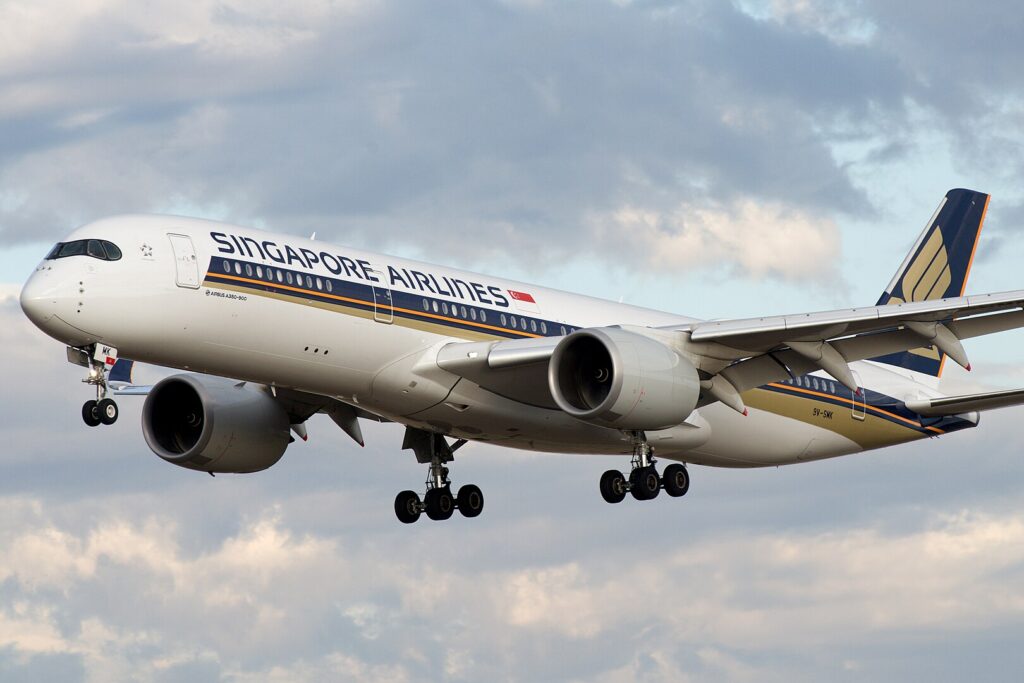
Singapore Airlines (SQ) continues to lead the ranking, operating both the New York JFK (JFK) to Singapore Changi (SIN) and Newark (EWR) to Singapore Changi (SIN) services using the Airbus A350-900.
The expansion reflects the arrival of efficient twin-engine widebody aircraft that have replaced four-engine jets on the longest sectors.
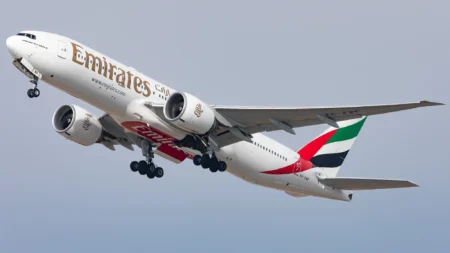
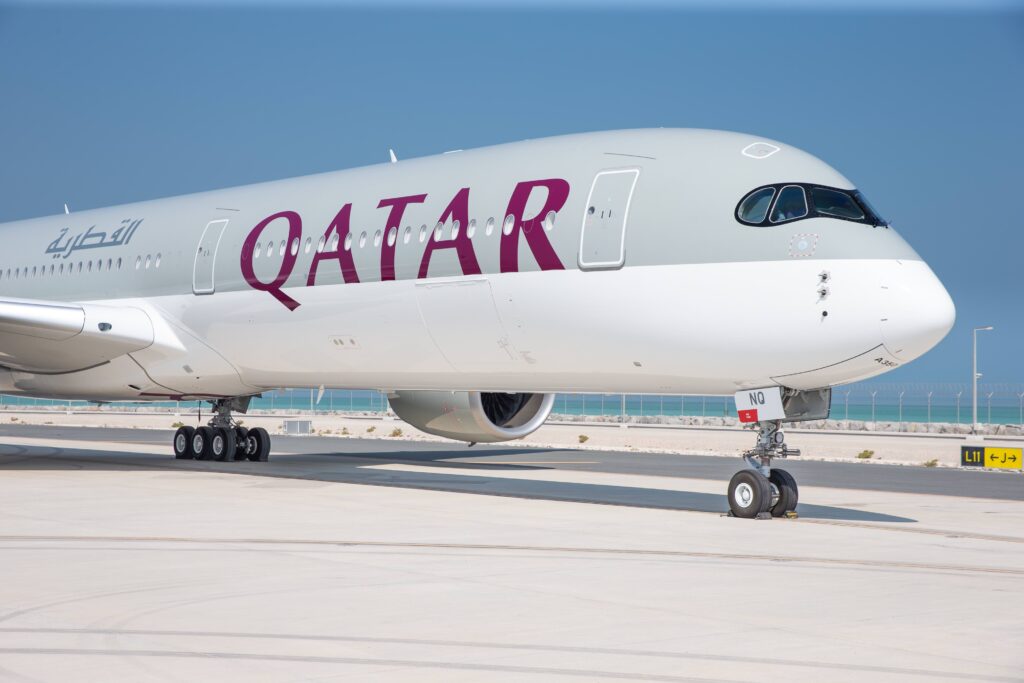
Carriers including Qantas Airways (QF), Qatar Airways (QR), Emirates (EK), Air New Zealand (NZ), and China Southern Airlines (CZ) now connect cities such as Auckland (AKL), London Heathrow (LHR), Perth (PER), Dallas Fort Worth (DFW), Doha (DOH), Paris CDG (CDG), Dubai (DXB), Mexico City (MEX), and Shenzhen (SZX) on routes exceeding 14,000 km.
A 25-Year Transformation in Ultra-Long-Haul Aviation
According to OAG, the average distance of the top 10 longest non-stop routes reached 14,504 km in 2025, compared with 13,464 km in 2010 and 12,667 km in 2000.
The 14.5% increase over 25 years reflects both airline ambition and progress in aircraft technology.
In 2025, Singapore Airlines operates the world’s longest commercial flight from New York JFK to Singapore Changi at 15,332 km, followed by its Newark to Singapore service at 15,329 km.
Both routes use the Airbus A350-900 and have been operated by Singapore Airlines for several years, showing how a single carrier and a single aircraft type can define the limits of commercial aviation.
World’s Top 10 Longest Non-Stop Routes in 2025
| # | Route | From | To | Airline | Aircraft | Distance (km) |
|---|---|---|---|---|---|---|
| 1 | JFK–SIN | New York JFK | Singapore Changi | Singapore Airlines | A350-900 | 15,332 |
| 2 | EWR–SIN | Newark | Singapore Changi | Singapore Airlines | A350-900 | 15,329 |
| 3 | AKL–DOH | Auckland | Doha | Qatar Airways | A350-1000 / B777-200LR | 14,526 |
| 4 | LHR–PER | London Heathrow | Perth | Qantas Airways | B787-9 | 14,499 |
| 5 | DFW–MEL | Dallas Fort Worth | Melbourne | Qantas Airways | B787-9 | 14,468 |
| 6 | CDG–PER | Paris CDG | Perth | Qantas Airways | B787-9 | 14,265 |
| 7 | AKL–JFK | Auckland | New York JFK | Air New Zealand / Qantas | B787 / B787-9 | 14,209 |
| 8 | AKL–DXB | Auckland | Dubai | Emirates | A380-800 | 14,193 |
| 9 | MEX–SZX | Mexico City | Shenzhen | China Southern Airlines | A350 | 14,124 |
| 10 | LAX–SIN | Los Angeles | Singapore Changi | Singapore Airlines | A350-900 | 14,096 |
The 2025 list shows a wide aircraft mix. The Airbus A380-800 still finds a place through the Emirates (EK) Auckland to Dubai service, while China Southern Airlines connects Mexico City and Shenzhen using the Airbus A350, marking the only Latin America to Asia route in the top 10.
The Aircraft That Changed Everything
In 2000, the Boeing 747-400 dominated ultra-long-haul operations, powering nine of the top 10 longest routes.
The only exception was Hong Kong (HKG) to Toronto (YYZ), jointly operated by Cathay Pacific (CX) and Air Canada (AC) on the Airbus A340-300.
The 747-400 had a range of 13,400 to 15,000 km, depending on variant, which set the practical ceiling for non-stop operations at the time.
World’s Top 10 Longest Non-Stop Routes in 2000
| # | Route | From | To | Airline | Aircraft | Distance (km) |
|---|---|---|---|---|---|---|
| 1 | ATL–JNB | Atlanta | Johannesburg | South African Airways | B747-400 | 13,575 |
| 2 | ATL–CPT | Atlanta | Cape Town | South African Airways | B747-400 | 13,082 |
| 3 | JFK–JNB | New York JFK | Johannesburg | South African Airways | B747-400 | 12,825 |
| 4 | LAX–MEL | Los Angeles | Melbourne | Qantas / United Airlines | B747-400 | 12,751 |
| 5 | HKG–YYZ | Hong Kong | Toronto | Air Canada / Cathay Pacific | A340-300 | 12,542 |
| 6 | JFK–TPE | New York JFK | Taipei | China Airlines | B747-400 | 12,538 |
| 7 | HKG–ORD | Hong Kong | Chicago O’Hare | United Airlines | B747-400 | 12,517 |
| 8 | CPT–FLL | Cape Town | Fort Lauderdale | South African Airways | B747-400 | 12,340 |
| 9 | CPT–MIA | Cape Town | Miami | South African Airways | B747-400 | 12,337 |
| 10 | LAX–TLV | Los Angeles | Tel Aviv | El Al Israel Airlines | B747-400 | 12,160 |
By 2010, the aircraft mix had begun to shift. The Boeing 777-200LR and 777-300ER had become the preferred choice on the longest sectors, accounting for several of the top 10 routes.
These twin-engine jets reduced operating costs compared with 4 engine aircraft, making ultra-long routes more commercially attractive.
The shift from four engines to two reshaped the economics of flying 13,000 to 15,000 km non-stop and added roughly 800 km to the average top 10 distance between 2000 and 2010.
World’s Top 10 Longest Non-Stop Routes in 2010
| # | Route | From | To | Airline | Aircraft | Distance (km) |
|---|---|---|---|---|---|---|
| 1 | EWR–SIN | Newark | Singapore Changi | Singapore Airlines | A340-500 | 15,329 |
| 2 | LAX–SIN | Los Angeles | Singapore Changi | Singapore Airlines | A340-500 | 14,096 |
| 3 | ATL–JNB | Atlanta | Johannesburg | Delta Air Lines | B777-200LR | 13,573 |
| 4 | DXB–LAX | Dubai | Los Angeles | Emirates | B777-200LR / 300ER | 13,395 |
| 5 | BKK–LAX | Bangkok | Los Angeles | Thai Airways | A340-500 | 13,275 |
| 6 | DXB–IAH | Dubai | Houston | Emirates | B777-200LR | 13,118 |
| 7 | DXB–SFO | Dubai | San Francisco | Emirates | B777-300ER | 13,013 |
| 8 | HKG–JFK | Hong Kong | New York JFK | Cathay Pacific | B777-300 | 12,965 |
| 9 | EWR–HKG | Newark | Hong Kong | Continental Airlines | B777 | 12,955 |
| 10 | DOH–IAH | Doha | Houston | Qatar Airways | B777-200LR / 300ER | 12,925 |
It is important to note that in 2010, the longest route, Newark to Singapore at 15,329 km, was operated on the four-engine Airbus A340-500 by Singapore Airlines.
Today’s equivalent A350-900 service is twin-engine, marking a major technological shift in ultra-long-haul economics.
Emirates operated three of the top 10 routes from Dubai in 2010, connecting to Los Angeles (LAX), Houston (IAH), and San Francisco (SFO), while Thai Airways (TG) flew Bangkok (BKK) to Los Angeles on the A340-500.
By 2025, five of the top 10 routes operate on Airbus A350 variants, either the -900 or the -1000. The remaining routes rely largely on the Boeing 787-9 Dreamliner, which offers a range of approximately 14,500 km.
The Emirates Auckland to Dubai service remains the only A380-800 operation in the top 10.
Regional Shifts: Africa Out, Asia-Pacific In
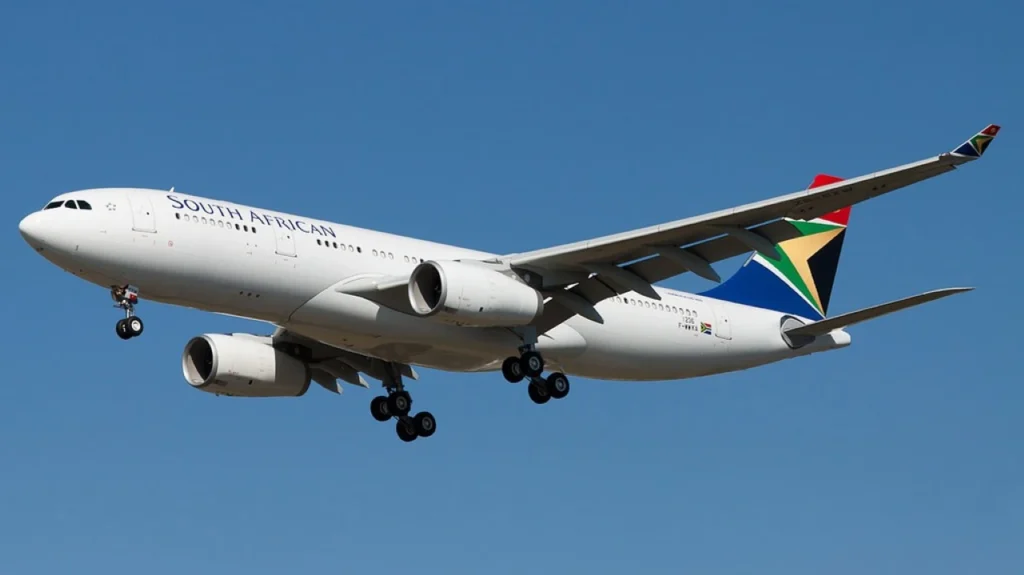
The geographic distribution of ultra-long-haul flying has transformed significantly. In 2000, African airports featured in five of the top 10 longest routes, all operated by South African Airways (SA) connecting Atlanta (ATL), New York JFK, and Cape Town with Johannesburg (JNB), Fort Lauderdale (FLL), and Miami (MIA).
By 2010, only the Atlanta to Johannesburg route operated by Delta Air Lines (DL) remained. In 2025, no African airport appears in the top 10.
The Asia-Pacific region has moved in the opposite direction. Four of the top 10 routes involved an Asia-Pacific airport in 2000.
By 2025, all 10 routes will connect to an Asia-Pacific destination. Singapore Changi, Auckland, and Australian airports have emerged as central nodes in the global ultra-long-haul network.
Gulf carriers based in Dubai and Doha have also expanded their connections to Asia and Australia.

Regional Presence in the Top 10 Longest Routes
| Region | 2000 | 2010 | 2025 |
|---|---|---|---|
| Africa | 5 | 1 | 0 |
| Asia-Pacific | 4 | 5 | 10 |
| North America | 10 | 10 | 5 |
| Middle East | 0 | 4 | 3 |
| Europe | 0 | 0 | 2 |
| Latin America | 0 | 0 | 1 |
North America’s presence has shifted as well. Every top 10 route in 2000 and 2010 included a North American airport.
In 2025, that figure is five. New Qantas services linking Europe and North America to Australia have introduced city pairs that bypass North America entirely, reshaping the upper end of the ranking.

Project Sunrise and the Next Frontier at 17,000 km
The next phase of ultra-long-haul aviation is taking shape through Qantas Airways’ Project Sunrise.
The carrier has ordered 12 specially configured Airbus A350-900ULR (Ultra Long Range) aircraft capable of flying approximately 18,000 km non-stop.
Qantas plans to launch direct services between Sydney (SYD) and London, covering nearly 17,000 km, in 2027.
The configuration involves trade-offs. Each aircraft will carry around 238 passengers, more than 100 fewer than a standard A350-900 layout, and the flight is expected to last approximately 22 hours.
Whether passenger demand and commercial economics can support that configuration at scale remains unclear, though the technical feasibility itself reflects the engineering progression that has shaped ultra-long-haul aviation over the past 25 years.
Network Advantages Continue to Drive Growth
Longer non-stop routes increasingly reduce dependence on traditional hub connections.
Airlines benefit through stronger network advantages, while passengers gain faster and more direct travel options.
Route planning decisions also increasingly depend on data analysis that identifies where demand and capacity growth create commercially viable opportunities.
The last 25 years demonstrate how engineering progress transformed ultra-long-haul flying from a technical challenge into a central airline network strategy.
Stay tuned with us. Further, follow us on social media for the latest updates.
Join us on Telegram Group for the Latest Aviation Updates. Subsequently, follow us on Google News