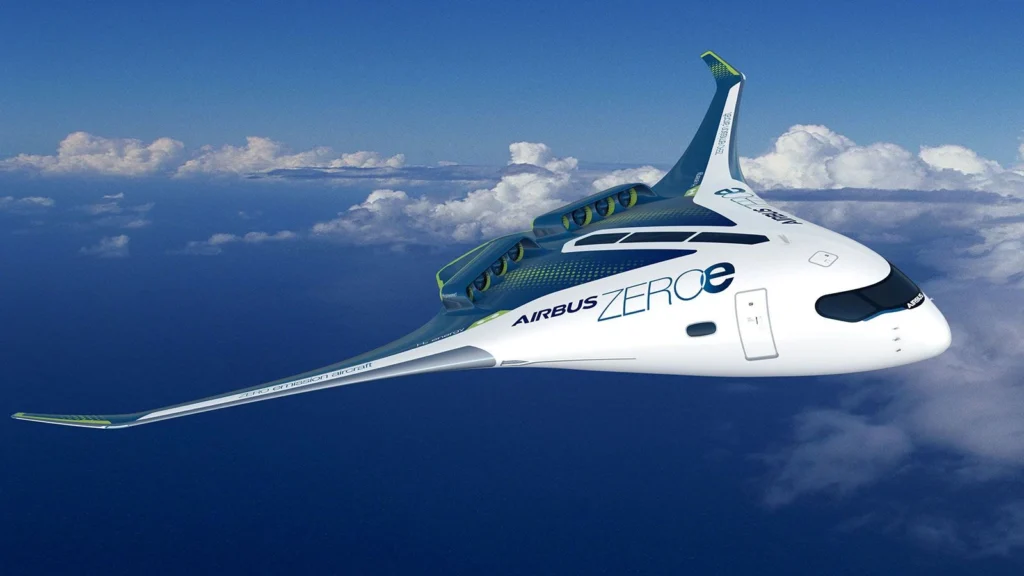
BEIJING- China Aerodynamics Research and Development Centre (CARDC) has introduced a futuristic flying-wing passenger aircraft concept capable of carrying more than 800 passengers. Unlike today’s conventional airliners, the aircraft integrates its wings and fuselage into a single lifting body to improve aerodynamic efficiency.
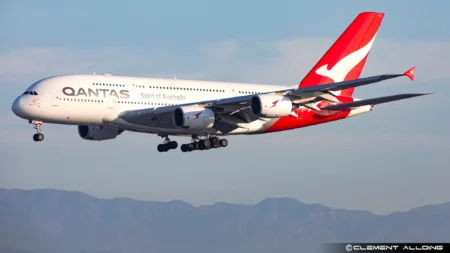
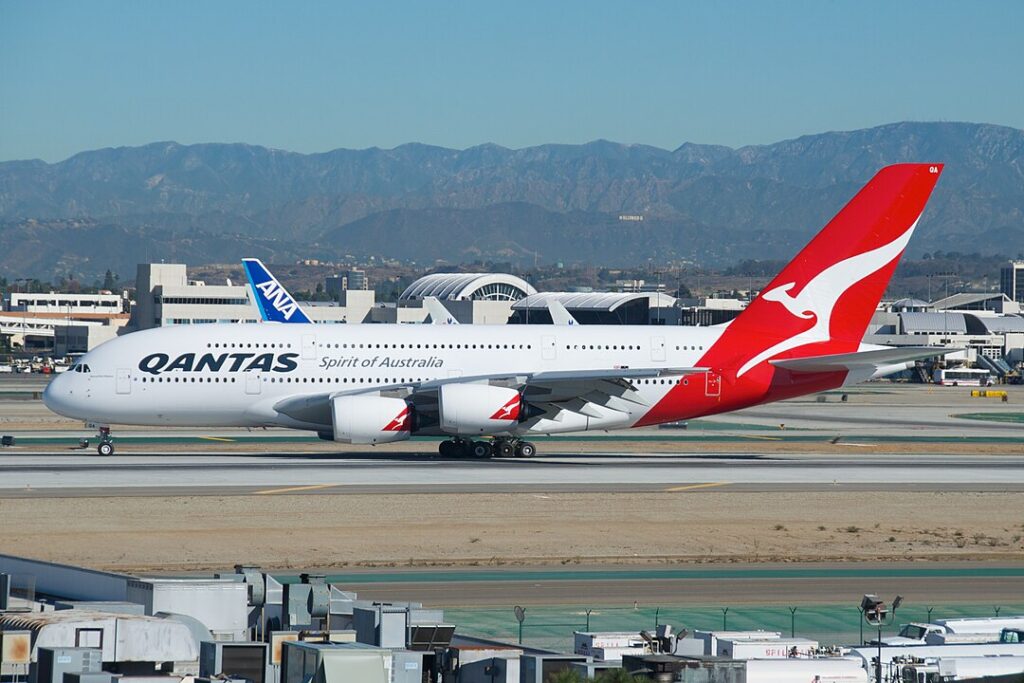
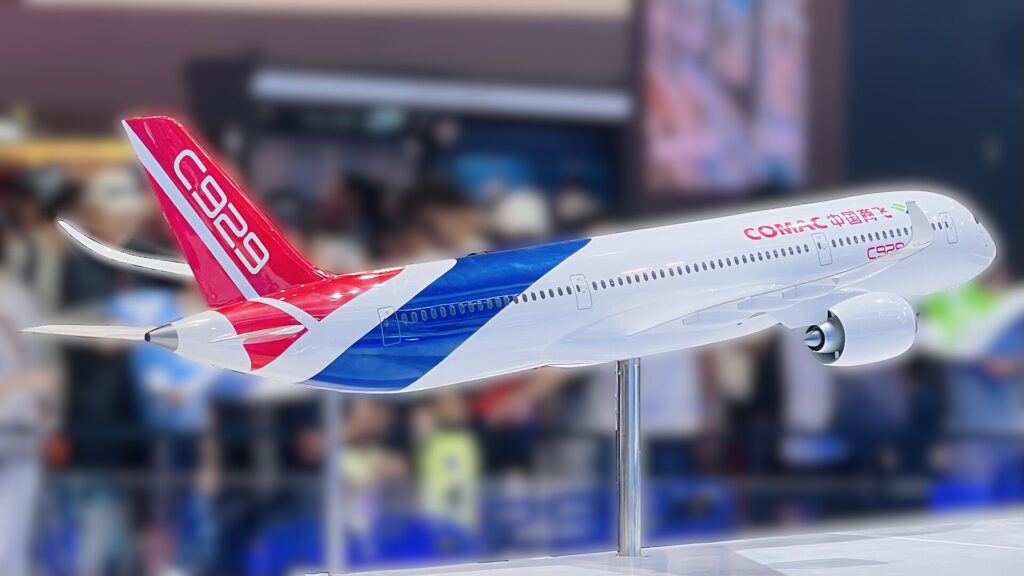
The research project expands China’s growing commercial aviation ambitions alongside programmes such as the COMAC C919 and the upcoming COMAC C929. While the aircraft remains in the research phase, the design demonstrates how future passenger aircraft could become more fuel efficient and capable of transporting significantly more passengers than today’s Airbus A380.
China Advances Flying Wing Passenger Aircraft Research
The concept was developed by the China Aerodynamics Research and Development Centre (CARDC), one of China’s leading aerospace research institutions. The organization has contributed to several major national aircraft programmes, including the COMAC C919 narrowbody airliner and the Xian Y-20 strategic transport aircraft.
Unlike traditional passenger aircraft that feature a separate fuselage, wings, and tail, the proposed flying-wing design combines nearly the entire aircraft into one broad lifting surface. This configuration reduces aerodynamic drag while increasing lift, offering the potential for longer flight ranges and lower fuel consumption.
According to researchers, the project is intended primarily as a scientific reference model for aerodynamic testing rather than an aircraft ready for commercial production.
The study was published in the Journal of Aerospace Power in June, where researchers described the model as a benchmark for validating wind tunnel experiments, computational simulations, and testing methods for large flying-wing aircraft.
Designed for More Than 800 Passengers
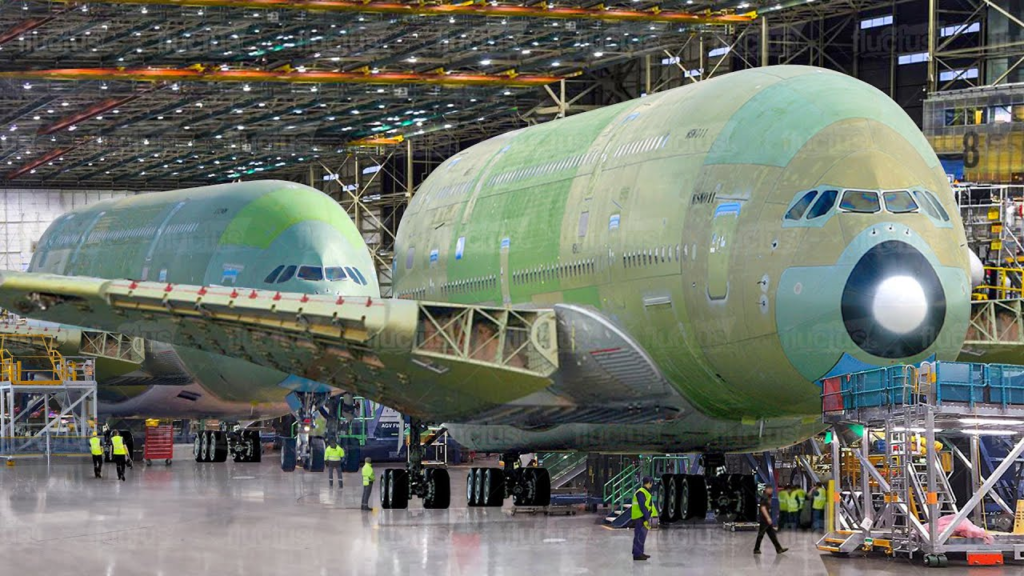
The aircraft is substantially larger than today’s biggest passenger jet.
According to the published specifications:
- Wingspan: 85 metres (280 feet)
- Length: 43 metres (141 feet)
- Reference wing area: approximately 1,395 square metres
- Cruise speed: Mach 0.8
- Leading-edge sweep: 37 degrees
- Trailing-edge sweep: 28 degrees
Its wingspan is approximately 1.6 times larger than the Northrop Grumman B-2 Spirit stealth bomber, which also uses a flying-wing configuration.
If eventually developed into a commercial aircraft, the design could transport more than 800 passengers, significantly exceeding the capacity of the Airbus A380, which typically accommodates around 555 passengers in standard airline layouts.
Aerodynamic Efficiency Is the Main Goal
The research focuses on improving aerodynamic performance rather than increasing speed.
Lead researcher Li Yonghong and his team explained that flying-wing aircraft offer several important advantages over conventional airliners.
According to the study, the design provides:
- Higher lift-to-drag ratio
- Lower induced drag
- Reduced energy consumption
- Longer operating range
- Improved aerodynamic efficiency
Researchers reported that the model achieved a maximum lift-to-drag ratio of approximately 20 at speeds below Mach 0.7. At its intended cruise speed of Mach 0.8, the ratio decreased slightly to 17.6, which still represents strong aerodynamic performance for an aircraft of this size.
These characteristics could make flying-wing aircraft more efficient than conventional widebody airliners if the engineering and certification challenges can eventually be solved.
Prototype Wind Tunnel Testing Underway
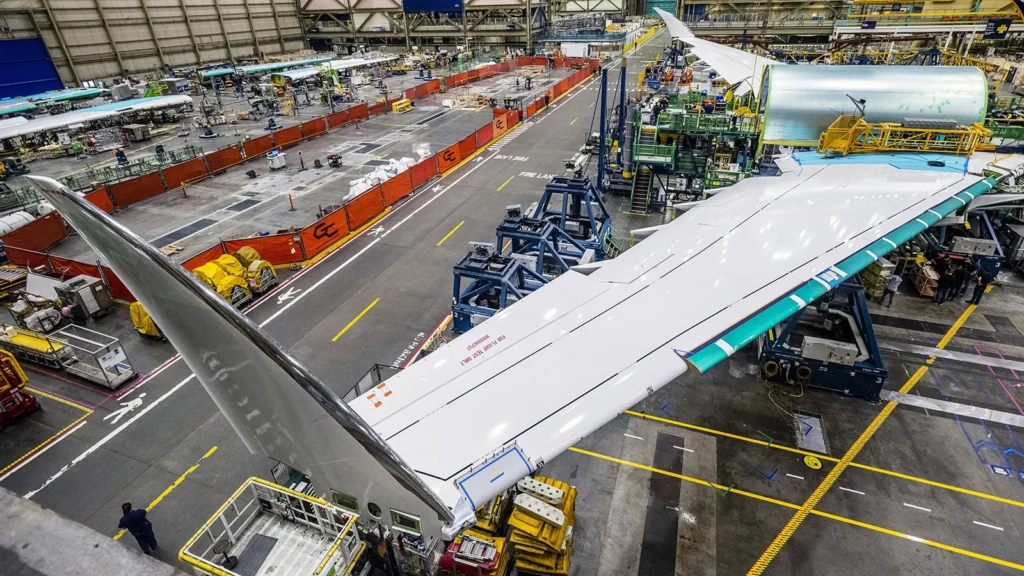
Although no full-size aircraft has been constructed, CARDC has already begun testing a scaled prototype.
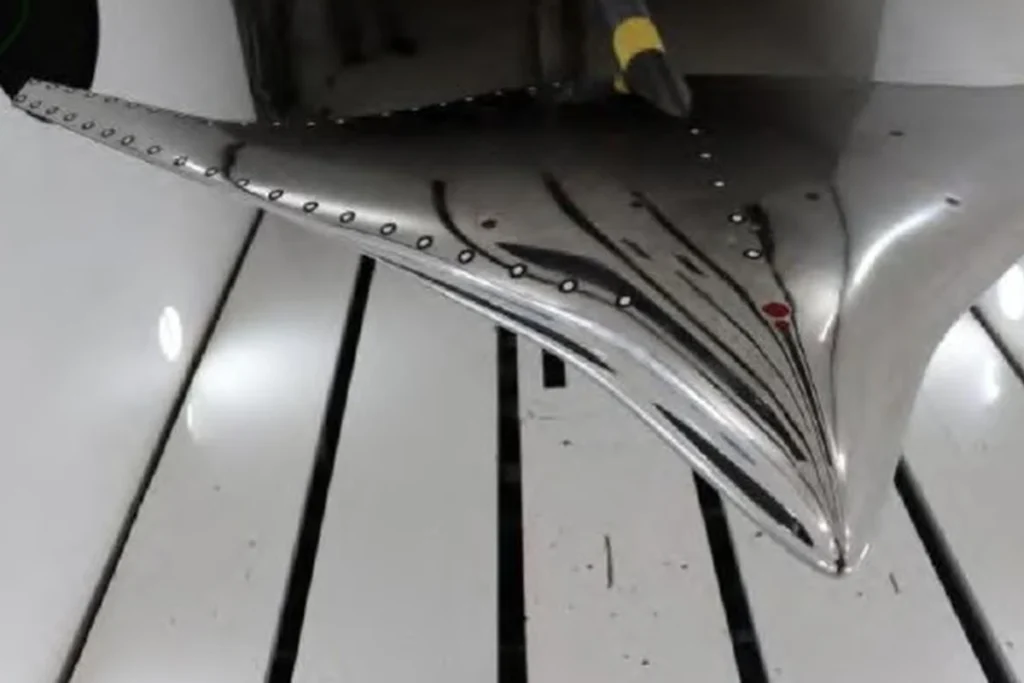
Engineers built a 1:52 stainless steel model measuring:
- Length: approximately 0.8 metres
- Wingspan: approximately 1.6 metres
The prototype has undergone extensive testing inside CARDC’s 2.4-metre transonic wind tunnel at speeds ranging from Mach 0.4 to Mach 0.8.
Researchers evaluated numerous performance characteristics, including:
- Aerodynamic behaviour
- Boundary-layer transition
- Measurement accuracy
- Longitudinal stability
- Lateral stability
- Structural deformation
- Aeroelastic performance
The research team concluded that the aircraft demonstrated excellent aerodynamic characteristics and could become a benchmark configuration for future flying-wing studies.
Part of China’s Expanding Commercial Aviation Programme
The flying-wing project represents another milestone in China’s long-term aerospace strategy.
China has steadily expanded its commercial aircraft industry in recent years through multiple programmes.
The COMAC C919 has already entered commercial service, marking China’s entry into the narrowbody passenger aircraft market.
Development is also progressing on the COMAC C929, a long-range widebody aircraft expected to carry approximately 280 passengers, with its first flight anticipated around 2030.
In addition, China continues research on the C949 supersonic passenger aircraft, a project that shares technological similarities with NASA’s experimental X-59 low-boom supersonic aircraft.
Researchers noted that the flying-wing programme originally began as a concept for a 250-seat aircraft comparable to widebody jets such as the Airbus A330 and Boeing 767. It was later expanded into an 800-passenger configuration as China increased its focus on next-generation large twin-aisle aircraft during its 13th Five-Year Plan.
While the concept remains experimental, the research highlights China’s continued investment in advanced aircraft configurations that could influence future commercial aviation technology.
Stay tuned with us. Further, follow us on social media for the latest updates.
Join us on Telegram Group for the Latest Aviation Updates. Subsequently, follow us on Google News